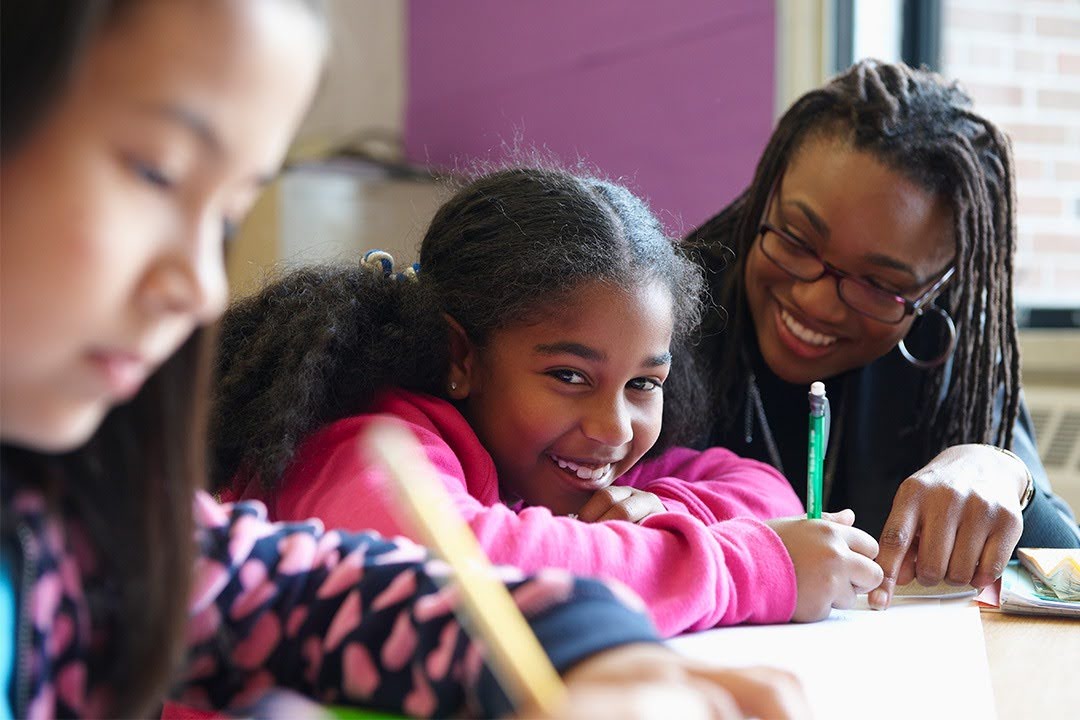
A first grader’s classroom success rarely depends on instruction alone. Sleep schedules, dinner-table conversations, and the trust felt between home and school shape how a child learns. Educators call this connection amily/caregiver engagement (or at-home engagement), and it is central to student success.
For decades, schools relied on traditional parental involvement: annual conferences, signed homework logs, and open-house nights. At-home engagement demands a deeper commitment. It builds an active, continuous partnership among educators, caregivers, and the community. As classrooms grow more diverse and teaching grows more complex, this partnership is no longer an optional add-on—it is a vital skill for modern educators.
Understanding what at-home engagement looks like, why research links it to student growth, and how teachers forge these relationships clarifies its role in modern education. Crucially, forward-thinking teacher preparation programs—such as the NYU Teacher Residency—now treat caregiver engagement as an essential discipline mastered through guided practice.
Earn Your MAT with a Full Year of Classroom Experience
Combine Theory and Practice in a 1-Year Classroom Residency
What Is At-Home Engagement in Education?
Engagement redefines how schools collaborate with families. Traditional involvement places caregivers in a reactive role: signing permission slips or reviewing folders. True engagement flips that dynamic. It calls on schools to foster a two-way relationship where caregivers serve as co-creators of a child’s education.
Organizations like the National Association for Family, School and Community Engagement view this connection as a shared responsibility. In practice, family and caregiver engagement comes alive through intentional moments:
- Celebrating a student’s milestone via a phone call before problems arise.
- Inviting a grandparent into the classroom to share a story in her native language.
- Asking caregivers about their hopes for their child before the school year begins.
Through ongoing dialogue, joint decision-making, or shared learning experiences, effective classrooms use these strategies to keep families connected.
Why At-Home Engagement Matters for Student Success
Decades of research confirm that at-home engagement delivers clear, measurable gains for students. Data from the American Psychological Association links strong caregiver-school partnerships directly to better attendance, higher grades, and improved test performance. The Centers for Disease Control and Prevention recommends that schools build multiple pathways for caregivers to get involved and stay involved. True engagement is never a one-off event—it thrives as a continuous conversation.
The real impact goes well beyond academic metrics:
- Confidence and social growth: When children see their caregivers actively connected to their learning, they show greater classroom confidence and stronger interpersonal skills.
- A safety net for youth: Research cited by the CDC shows that strong engagement acts as a protective shield against risky adolescent behavior, giving students steady, unified support across home and school.
- Lasting foundations: While at-home partnerships benefit students from kindergarten through high school graduation, their influence is most powerful in the earliest years. That early alignment shapes how children view school—and whether they see it as a place where they belong.
At-Home Engagement in Early Childhood and Elementary Education
Young children don’t separate home from school the way older students learn to. A kindergartner’s sense of security, curiosity, and readiness to learn comes largely from the adults around them. Those adults include her caregivers as much as her teacher.
The Office of Head Start’s Parent, Family, and Community Engagement Framework views at-home engagement as a strengths-based partnership driven by positive, goal-oriented relationships. Research grounded in this model indicates that early participation pays off, driving clear gains in school readiness and foundational language and literacy skills like vocabulary growth and print awareness. Continuity between environments makes all the difference. When early childhood educators and parents align their approach to routines, behavior, and learning goals, school feels like a natural extension of home rather than a jarring shift.
Building Strong Caregiver Partnerships: Strategies and Challenges
At-home engagement rarely happens by chance; it comes from deliberate, everyday practice. Teachers who successfully partner with caregivers rely on a few proven habits:
- Creating early, warm connections: Greeting caregivers by name and inviting them into classroom routines long before any academic or behavioral issues arise
- Keeping two-way channels open: Using phone calls, notes, apps, or conferences to share everyday wins alongside concerns
- Honoring cultural and linguistic assets: Learning about each caregiver’s unique background to ensure communication and lessons resonate
- Inviting active participation: Involving caregivers in hands-on learning, whether through interactive home projects or classroom visits
- Building a reservoir of trust: Establishing a strong rapport early so the relationship stays resilient when real challenges crop up
Work schedules keep some caregivers from attending daytime events. Caregivers without reliable transportation or home internet access may struggle to reach a school building or log into an online portal. Language differences can turn a caregiver-teacher conference into a barrier rather than a bridge, while past negative experiences with school systems can make others hesitant to step forward.
Well-prepared educators refuse to view these barriers as dead ends. Instead, they adapt, offering flexible phone check-ins, translating materials into home languages, or meeting caregivers directly in trusted community spaces.
Why Caregiver Engagement Is an Essential Skill for Teachers
Modern teaching extends far beyond delivering subject-matter lessons. Today’s educators are relationship builders who navigate diverse at-home backgrounds, coordinate with local community organizations, and bridge language differences to ensure every caregiver has a voice.
Technology has transformed how that daily dialogue happens. Learning management systems, translation tools, and messaging apps bring the classroom straight to a caregiver’s phone. While these digital tools open new doors, they also demand extra effort: teachers must master the platforms themselves and guide caregivers who need help navigating them so no student falls through the cracks.
Connecting with caregivers is a learned professional discipline, not an innate talent or something picked up by chance on the job. Recognizing this, national standards bodies like the Council for the Accreditation of Educator Preparation (CAEP) and the InTASC Model Core Teaching Standards now require teacher candidates to demonstrate real competency in at-home and community collaboration.
Yet despite these national expectations, only about half of educator preparation programs offer a dedicated course on the topic, according to a study by AACTE and the National Association for Family, School and Community Engagement. That gap makes specialized, hands-on training in caregiver engagement a major distinguishing feature when evaluating teacher preparation programs.
Learning To Build Caregiver and Community Partnerships Through Teacher Residency
Extended classroom placements offer a fundamentally different caliber of preparation than a traditional, single-semester student teaching block. The NYU Teacher Residency embraces this immersive model, pairing a full year of classroom experience with a Master of Arts in Teaching (MAT) and eligibility for initial teaching certification in New York State.
Instead of rotating through brief, fragmented placements, residents spend the entire academic year embedded in a single partner school alongside a dedicated mentor teacher. That continuity gives residents time to build real relationships with the caregivers and communities connected to their classroom, not just their students.
That philosophy anchors the program’s curriculum, preparing residents to become culturally responsive teachers who actively partner with caregivers to foster student well-being. Program faculty bring this commitment directly to their scholarship and advocacy.
Sustaining Long-Term Caregiver Partnerships
At-home engagement functions as an ongoing partnership that shapes how students learn. It impacts the way school communities operate and how far students progress throughout their education.
Prospective teachers who want to build that kind of partnership, rather than learn it through trial and error, have an option. The NYU Teacher Residency offers a year of guided practice in a real classroom, alongside real caregivers and communities, from day one. Those interested in the program can learn more or start an application.